Item: Bill of Exchange
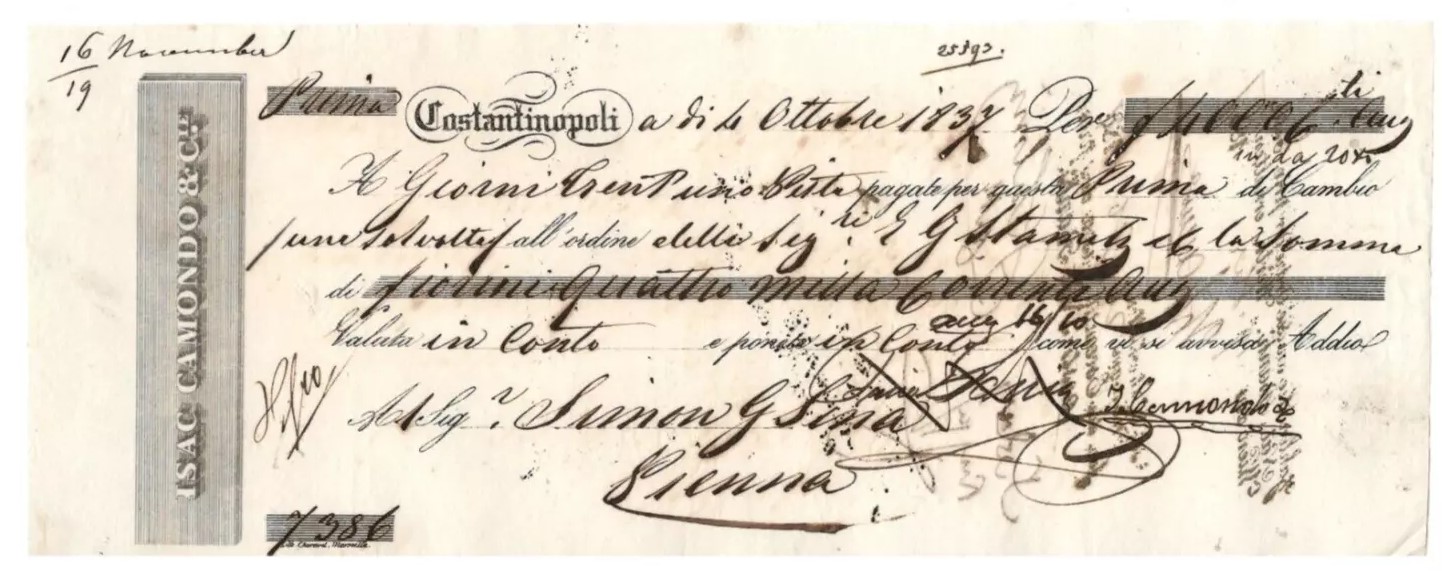
Issuer: Isaac Camondo & Co., Constantinople
Place of Issue: Constantinople (Istanbul), Ottoman Empire
Description:
This bill of exchange, issued on 4 October 1837, is an exceptional financial document from the 19th century, originating in the heart of the Ottoman Empire. Issued by Isaac Camondo & Co., a prominent banking and merchant family firm in Constantinople (modern-day Istanbul)
Key Features:
Issuing Entity: Isaac Camondo & Co. was a key player in the trade networks of the Ottoman Empire. The Camondo family, of Jewish descent, was deeply involved in banking and international commerce, helping to connect European markets with the Middle East and Asia. Their financial and commercial influence stretched across the Mediterranean.
Historical Context: The bill reflects the economic activity of the mid-19th century, a period of growing trade relations between Europe and the Ottoman Empire. Constantinople was a vital commercial center, and this bill is a prime example of the financial instruments used in international trade during this time.
Currency & Payment: The Florin, a widely used currency in Europe at the time, is specified as the payment amount, highlighting the international nature of the transaction. The use of the Florin also reflects the financial systems that linked Western Europe and the Ottoman Empire.
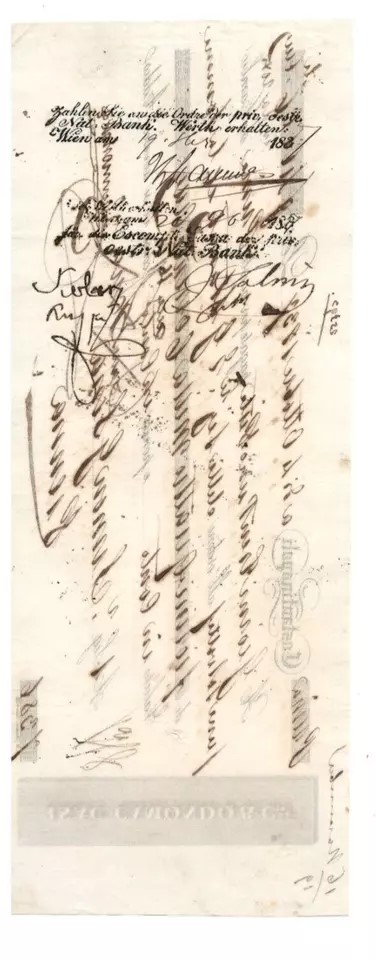
The document features numerous endorsements, stamps, and markings on the reverse, attesting to its authenticity and the journey of the bill through various hands. This bill of exchange is a valuable artifact, shedding light on the economic interconnections of the time and the significant role played by the Camondo family in facilitating trade.
For collectors of Ottoman financial history, international trade documentation, or the history of Jewish merchant families in the Ottoman Empire, this bill is an extraordinary piece. Its well-preserved condition and historical relevance make it a highly desirable addition to any collection of 19th-century financial artifacts.